

Dental calculus (tartar) is a hardened and calcified film layered on your teeth’s enamel, and it requires professional dental cleaning, while plaque is a thin and sticky film that you can remove with regular brushing. However, the crusty coating near the gum line won’t go away. Let’s understand what’s growing on your teeth and how to get rid of it.
Dental Plaque and Dental Calculus (Tartar) – What’s the Difference?
| Features | Dental Plaque | Dental Calculus (Tartar) |
| What does it look like? | A thin, white/yellow, and sticky layer | A rock-hard deposit sits on the enamel and extends beneath the gumline |
| How does it form? | Formed by bacteria, saliva and food particles after hours of brushing. | When plaque is not cleaned off within 24 to 72 hours, it forms hard deposits by reacting with minerals in your saliva. |
| How can you remove it? | Brushing, flossing and regular oral hygiene | Teeth cleaning or scaling by a dental professional |
How Do Dentists Remove Tartar and Hardened Calculus?
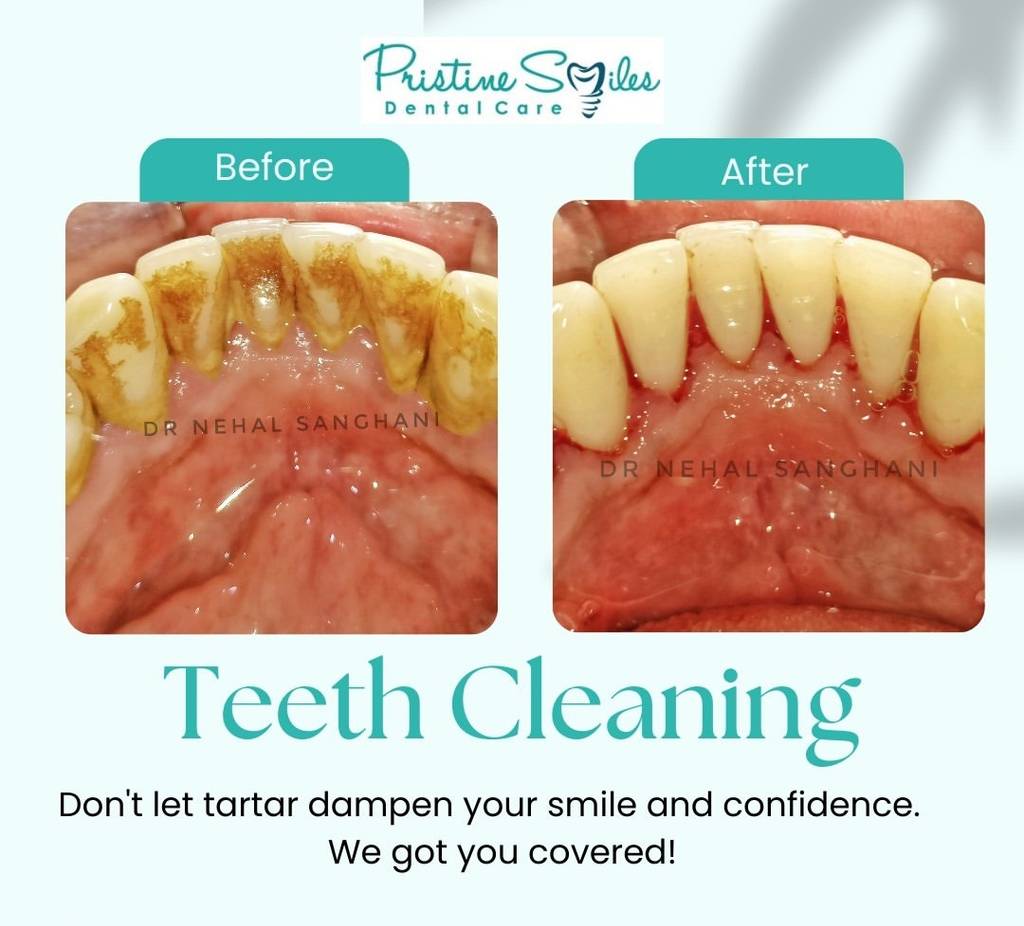
Ultrasonic scalers to get rid of the tartar. If the deposits are too deep below your gum line, then the dentist will suggest getting a deep cleaning procedure wherein finer hand instruments are used by a gum specialist/ periodontist, dr nehal sanghani at pristine smiles dental care
After scaling, dentists usually follow up with polishing to smooth the surface. Polishing makes the tooth surfaces smooth after the cleaning procedure
Check the teeth cleaning after-before scenario →
Does Tartar Build Up on Dentures?
Dentures are not inherently protected from plaque. Plaque and calcified cement-like deposits can grow on denture surfaces like natural teeth. You cannot treat it at home by soaking the dentures in water overnight. Like tartar removal, cleaning dentures requires professional precision. If the denture has tartar buildup due to poor cleaning habits by the denture wearer, it leads to bad breath and food sticking to the surfaces of the tartar. An annual visit to the dentist for denture cleaning and maintenance is recommended.
Regular Cleaning or Deep Cleaning: What Do You Actually Need?
Your dentist has recommended deep cleaning instead of regular cleaning, and you don’t know what this means. Let’s understand it in simple terms. When tartar builds up below the gum line, it causes inflammation, which is a sign of periodontitis.
To treat this, scaling and root planing is usually recommended, as it targets removing the tartar deposits that have accumulated below your gum line and smooths the tooth root itself so gums can reattach and heal.
How to Prevent Plaque from Turning into Tartar?
If you follow this dental routine, you can prevent plaque from turning into tartar, because prevention is easier than a cure.
- Brush twice a day: You can use a fluoride toothpaste and a soft-bristled toothbrush for two full minutes.
- Floss daily: Flossing can clean the deepest area between the teeth where toothbrush bristles can’t reach.
- Regular visits to your dentist: It is recommended to get your teeth cleaned every 6 months by a dental professional.
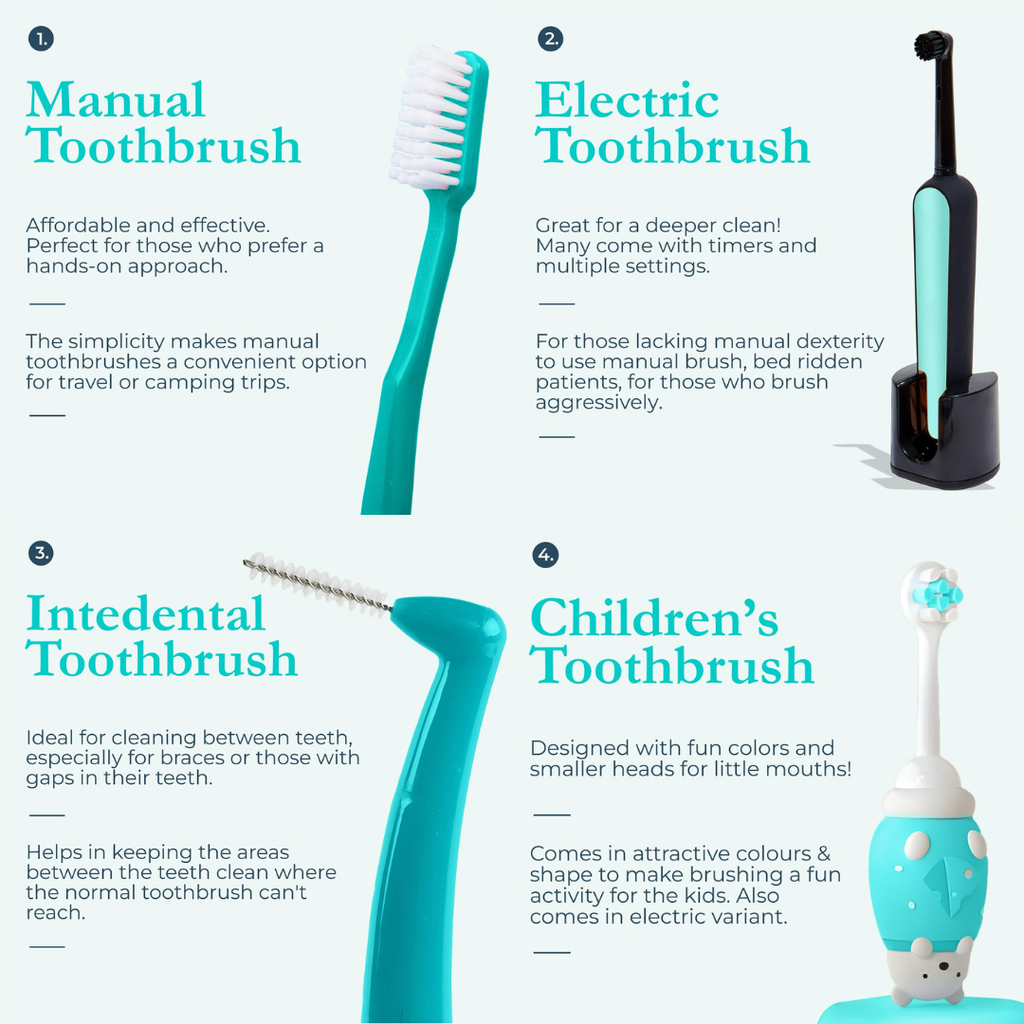
Learn different types of toothbrushes ➔
Pristine Smiles Dental Care: The Ultimate Destination for Oral Care
From Mumbai to Bangalore, our dental clinic in HSR caters to professional dental services under one roof with state-of-the-art technology and the best expertise for each branch. From ultrasonic teeth cleaning, laser teeth whitening and veneers to smile makeovers, Pristine Smiles Dental Care brings comprehensive care for your gums and teeth. Minimally invasive dentistry enables pain-free, safe treatment under precise professional care, tailored to your needs.
Final Remark
Are you still letting plaque and tartar dent into your confidence? Our expert team helps you restore your dental health and smile with advanced treatment – hassle-free and stress-free.
Book your comprehensive consultation today at Pristine Smile Dental Care at HSR 27th Main Road.
FAQs
Are tartar and plaque the same?
No. Plaque is a soft bacterial film that can be removed with brushing, whereas dental tartar is calcified plaque on the tooth and needs professional teeth cleaning.
Is a deep teeth cleaning painful?
A deep teeth-cleaning procedure, including scaling and root planing, is not painful because it is performed under local anaesthesia.
How often should I get a professional teeth cleaning?
A professional dental cleaning every 6 months is ideal to prevent plaque from hardening into calculus if you have healthy gums. However, if your teeth are prone to rapid buildup, or you are a regular smoker, or have gingivitis, your dentist may recommend checkups every 3 to 4 months to protect your gum health.
Can one remove tartar at home?
No, tartar needs ultrasonic scalers, and tartar removal needs to be done in a professional setting by a registered dental practitioner
Should whitening be done before or after tartar teeth cleaning?
You should always go for a professional dental cleaning before whitening, because the whitening gel can work most effectively on a clean tooth surface.
Does scaling loosen my teeth?
No, scaling does not loosen your teeth. If your teeth feel loose after cleaning, it is because the heavy tartar buildup was hiding advanced gum disease or bone loss. Scaling removes the buildup, and your gums can heal faster.
What are the signs that I need a teeth scaling to be done?
You may need teeth scaling if you notice yellow or brown tartar buildup, bleeding gums, bad breath, swollen or tender gums, or plaque that regular brushing cannot remove. You may book an appointment with Dr Nehal Sanghani at Pristine Smile Dental Care in HSR Layout to assess whether scaling is needed.